
top of page

Faith Over Fear: The “Bahala Na”[Come What May] Mindset


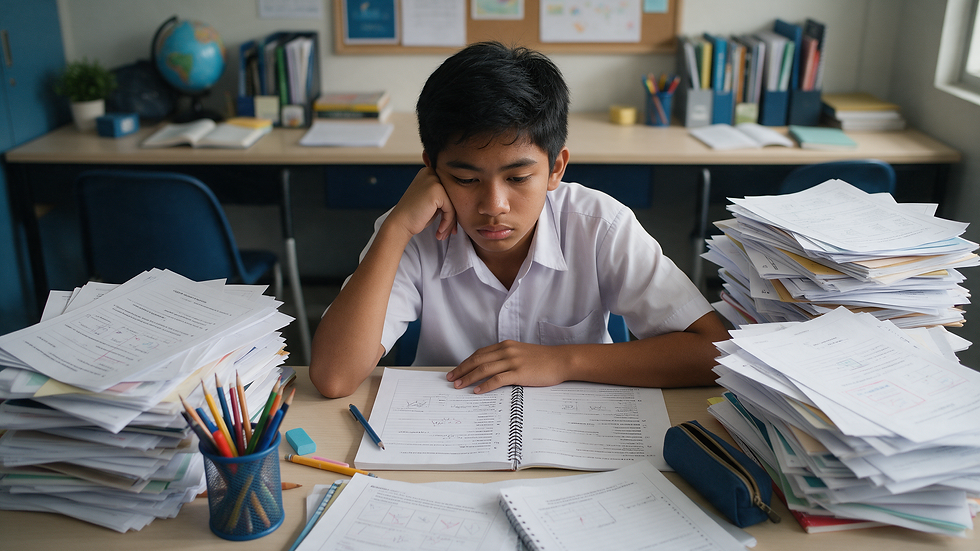
The test paper lands on the desk. The classroom suddenly becomes quieter than usual. Eyes scan the questions. Pencils stop moving. Foreheads wrinkle.

Then comes the realization, “Hindi ko ’to na-review.”

A deep breath. A nervous glance at the ceiling. And the most Filipino response to uncertainty is “Bahala na.”

It is the unofficial prayer of the unprepared, the final words before entering an examination room, and the phrase whispered when the plan has been exhausted, and all that remains is to face whatever comes next.

For Filipino students, the scenario is almost a ritual. The teacher announces examination days in advance. There is plenty of time to study, yet somehow, “mamaya na” becomes “bukas na lang,” and “bukas na lang” becomes the night before the exam.

The reviewer remains unopened. The notes remain untouched. The student stares at the ceiling and whispers, “Bahala na.”

Funny? Absolutely. But behind those two words lies something deeper than an excuse for cramming. Bahala na is a mindset.

The phrase is traditionally associated with Bathala, a supreme deity in precolonial Tagalog belief. One commonly cited explanation traces bahala na to “Bathala na,” expressing the idea of entrusting something to Bathala—or, in its later Christian interpretation, to God.

At its heart is surrendering. But surrender does not necessarily mean defeat. Sometimes, surrender means recognizing that there are things beyond human control. You can prepare. You can work. You can try. You can pray. But eventually, there comes a moment when the outcome is no longer yours to command.

And that is where faith enters. Of course, Filipinos have found a rather humorous way to practice this philosophy. “Hindi ako nag-review, bahala na.”

It is perhaps the most relatable version of the phrase among students. It can be heard before examinations, competitions, recitations, interviews, and almost any situation where preparation meets uncertainty. But there is an important difference between saying bahala na after giving your best and saying it instead of giving your best.

The first is faith. The second is procrastination wearing a halo.

Faith does not mean abandoning effort. A student still has to study. An athlete still has to train. A dreamer still has to work. A person still has to take the first step. Bahala na becomes meaningful after we have done our part.

“Do your best, and God will do the rest.”

The phrase does not promise that everything will turn out exactly as planned. Instead, it reminds us that while we cannot control every outcome, we can control the effort we give before that outcome arrives.

Fear, however, rarely cares about what we can control. It asks, “What if I fail?” “What if I am not good enough?” “What if things do not turn out the way I hoped?” And sometimes, the Filipino response is not to have an answer. It is simply, “Bahala na.”

Not because there is no fear, but because faith can be greater than the fear of the unknown. That is where the phrase becomes a symbol of Filipino resilience.

Resilience is often imagined in grand moments—people overcoming hardships, rebuilding after disasters, or finding hope in difficult circumstances. But resilience also exists in ordinary moments.

It is the student who takes the examination despite being nervous. The teenager who tries out despite the possibility of rejection. The graduate who sends another application after receiving another “no.” The person who starts again after failing. They do not always know what will happen. They simply choose to continue.

Perhaps that is why bahala na has survived through generations. Its meaning may have evolved with time, but its heart remains familiar: do what you can, trust what you cannot control, and keep moving. Maybe we have misunderstood bahala na all along. It is not simply “Whatever happens, happens.” It can be, “Whatever happens, I will face it.”

There is a difference.

The first sounds like surrendering responsibility. The second sounds like accepting uncertainty while choosing courage.

And that is resilience.

Being resilient does not mean being fearless. It means being afraid and continuing anyway. It means not knowing the answer but still writing something. It means not knowing the future but still preparing for it. It means praying for the best while trusting God with whatever comes.

So the next time an examination paper lands on the desk, perhaps bahala na can mean something more than panic over an unanswered number. Study. Prepare. Give everything you have. Then breathe. Pray. And trust.

Because there are things we can control, and there are things we must leave in God's hands. The Filipino spirit has always found a way to move forward despite uncertainty. Maybe that is the true meaning behind the two little words we say so casually, “Bahala na.” Not “I give up.” Not “I don't care.” But “I have done my best. Now, I trust God with the rest.”

Because faith does not promise that we will never fall, it gives us the courage to take the next step even when we are afraid of falling. And when fear asks, “What if you fail?”

Perhaps the Filipino answer has always been simple: “Bahala na.” Then keep going.

Comments


Top Stories

Stay updated with the latest news from Pulilan. Subscribe to our newsletter for instant updates.

Contact us

  • Instagram
  • Facebook
  • Twitter

© 2023 by Pulilan News Hub. All rights reserved.

bottom of page