
top of page

If Research Matters, Why Does It Stop at Graduation?


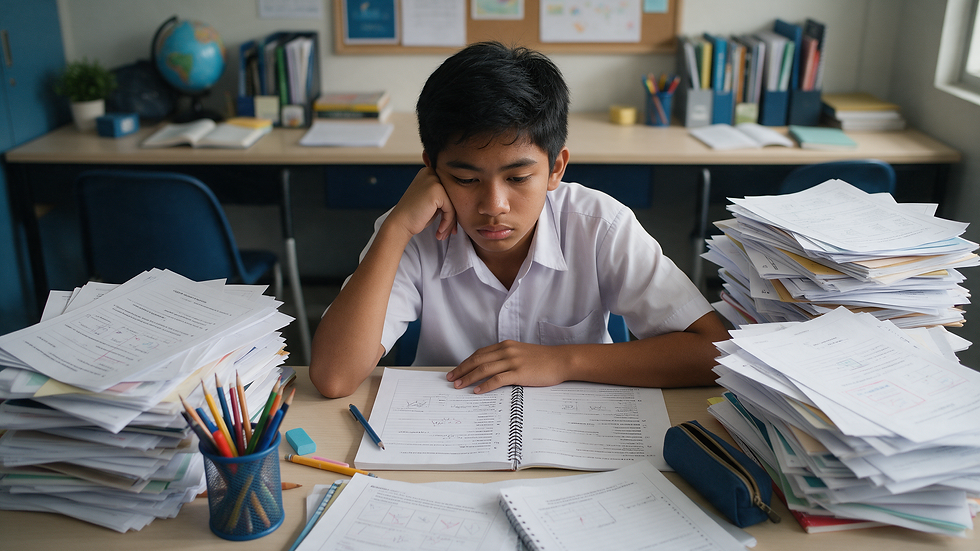
When you hear the word “research,” what do you think about? Maybe you think about the weeks spent writing your manuscript, the pages of related literature, the group chats reminding everyone about deadlines, or that one thing almost every research group eventually talks about: the defense. For many Filipino students, research is something we have learned to associate with long nights, revisions, and nervous presentations.

But why does it take up so much space in our education?

In Senior High School, Filipino students take Practical Research 1 and Practical Research 2. These subjects teach students how to identify a problem, review existing studies, gather and analyze data, and present their findings. DepEd’s curriculum also expects students to design research that can be useful in daily life.

There is a reason for teaching these skills. We live in a world where information is everywhere. We see claims on social media, encounter statistics without knowing where they came from, and come across studies that are often reduced to a headline. Research teaches us to stop and ask: Where did this information come from? What evidence supports it? Can the data really support the conclusion?

The Philippines has also made research a more structured part of the Senior High School experience than many other education systems. In the United States, for example, there is no single nationwide requirement for every high school student to take a research subject. Requirements vary between states, districts, and schools. Some schools require research or capstone projects, but it is not organized through one national curriculum in the same way it is in the Philippines.

This does not mean one system is automatically better. It does, however, make us ask what we hope to get from making research a regular part of Filipino students’ education. If we are going to spend this much time teaching research, what should students actually take away from it?

Think about how the process usually goes. We choose a topic, write the manuscript, collect data, analyze it, revise it, and prepare for the defense. Somewhere along the way, the question that made us interested in the topic can become less important than simply getting everything finished.

Then comes the defense.

A research defense is meant to give students a chance to explain their study, answer questions, and defend their conclusions. Being questioned is an important part of research because it helps us see weaknesses in our work.

For students, however, the defense can become something we simply have to survive. We ask each other what the panel might ask, share possible answers, and warn each other about strict panelists. The fear of not knowing what to say can sometimes become bigger than the excitement of presenting what we actually found.

This can affect how students see research itself. Research is supposed to begin with curiosity. We notice something, ask a question, and look for an answer. But when most of our attention goes toward deadlines, formatting, revisions, and the defense, that curiosity can get pushed aside.

A 2025 study involving 364 senior high school students in Davao del Sur looked at students’ research skills and attitudes toward research, including research anxiety, perceived usefulness, relevance to life, and difficulties they experience. The findings point to an important issue: being able to conduct research does not always mean enjoying the process.

So after all those months of work, what happens to the research?

Some student studies are published, entered into competitions, continued by their authors, or used as a starting point for another project. Others may simply remain in school files or on the students’ computers. We cannot say that every student paper is forgotten, but we can ask whether students are given enough opportunities to see what happens to their work after the grade is recorded.

Can future students access previous studies? Can a student continue their own research after graduation? Are useful findings ever shared with the people they were meant to help? Do students even know what happens to their research once they leave?

These questions matter because research is meant to produce knowledge that can be shared, improved, and used. A study does not lose its value just because the semester has ended.

Not every Senior High School research paper needs to become a major scientific study. But students should be able to see that their work can have a life beyond the classroom. Schools can give students opportunities to continue promising projects, make previous studies easier for future batches to access, or connect useful research with universities and communities.

The way research is taught matters too. Students need to understand why they are doing a study, not only how to complete its format. They need room to ask questions they actually care about and to understand that an unexpected result does not mean the research failed. The defense should challenge students to understand their work, not simply leave them afraid of being questioned.

The Philippines has made research a major part of Senior High School education. That gives us a chance to develop students who know how to question information, look for evidence, and keep asking questions.

But if students spend years being told that research matters and then graduate without knowing what happened to their own research, something is worth reconsidering.

Maybe the success of research education should not only be measured by how many papers students finish or how many defenses they pass. We should also ask whether students carry the habit of questioning with them after there is no longer a grade attached to it.

Because the paper can end when graduation comes, the curiosity behind it should not have to.

Comments


Top Stories

Stay updated with the latest news from Pulilan. Subscribe to our newsletter for instant updates.

Contact us

  • Instagram
  • Facebook
  • Twitter

© 2023 by Pulilan News Hub. All rights reserved.

bottom of page