
top of page

The Odyssey of the Straw Hat Pirates: How One Piece Became the Greatest Modern Epic Since Homer


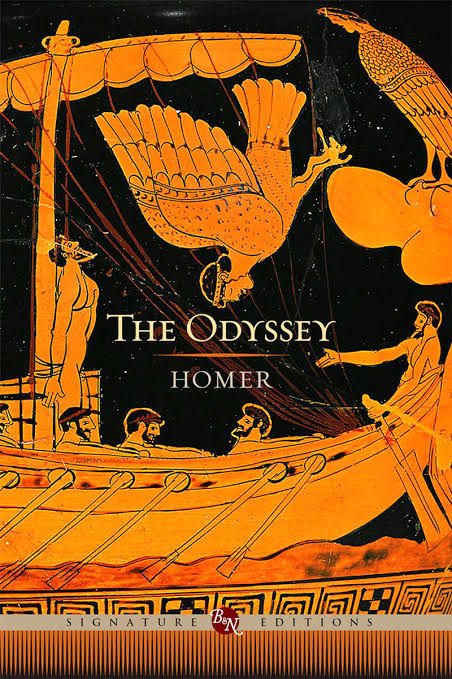
For nearly 3,000 years, The Odyssey has stood as one of humanity's greatest adventure stories. It is the tale of a man who survived monsters, gods, betrayal, and war, all in pursuit of one destination: home. It defined the archetype of the hero's journey and inspired countless novels, films, and television series.


Then, in 1997, a young Japanese artist named Eiichiro Oda began serializing what many assumed would be another pirate comic.


Nearly three decades later, One Piece has become something far greater.

With over 1,100 chapters, more than 1,100 anime episodes, dozens of novels, films, and one of the richest fictional worlds ever created, One Piece has quietly become the closest thing modern storytelling has to another Odyssey. But unlike Homer's masterpiece, Oda's journey is longer, broader, emotionally deeper, and perhaps the most ambitious continuous narrative ever written.

The comparison is not merely symbolic. The parallels between the two works are astonishing.


Every Great Adventure Begins With Leaving Home

Odysseus leaves Ithaca because duty demands that he fight in the Trojan War.

Monkey D. Luffy leaves Foosha Village because freedom calls him toward the sea.

Neither hero begins with wealth or power. Instead, they possess an almost irrational confidence that they are destined for something greater.

Odysseus seeks to return home after proving himself in war.

Luffy seeks the legendary One Piece to become the Pirate King.

Both understand that the destination is meaningless without the journey.


The Sea Is Never the Enemy

In The Odyssey, the sea represents uncertainty.

Each island Odysseus visits becomes a lesson about humanity.

The Lotus-Eaters symbolize complacency.

The Cyclops represents arrogance.

Circe embodies temptation.

The Sirens tempt with dangerous knowledge.

Scylla and Charybdis force impossible choices.


Likewise, every island in One Piece functions as a self-contained civilization with its own politics, culture, philosophy, and moral dilemma.


Arabasta explores civil war.

Skypiea questions religion and colonialism.

Water 7 examines justice and corruption.

Thriller Bark confronts trauma and identity.

Dressrosa dissects dictatorship and propaganda.

Whole Cake Island investigates abusive families.

Wano reflects isolationism, oppression, and inherited will.

Egghead explores artificial intelligence, government censorship, and the ethics of scientific progress.

Neither story is truly about traveling across oceans.

They are about traveling through different versions of humanity.


Monsters Become People

Odysseus fights monsters.

Luffy befriends them.

This may be the greatest philosophical difference between the two epics.

The Cyclops exists simply as an obstacle.

The Sirens are dangers.

The sea monsters are enemies to survive.


In One Piece, almost every villain eventually becomes understandable.

Sometimes even lovable.


Crocodile evolves from ruthless tyrant into reluctant ally.

Buggy transforms from comic relief into one of history's luckiest pirate emperors.

Bon Clay sacrifices everything for friendship.

Bellamy abandons blind ambition after discovering true purpose.

Katakuri begins as an invincible enemy and ends as perhaps Luffy's greatest rival built on mutual respect.

Even former antagonists like Hatchan become tragic victims of prejudice.

Very few characters remain one-dimensional.

Everyone has a history.

Everyone has dreams.

Everyone carries scars.


Gods Versus Governments

Odysseus constantly struggles against divine beings.

Poseidon controls his fate.

Athena protects him.

Zeus ultimately determines outcomes.

The greatest powers in Homer's world are supernatural.


In One Piece, the gods have simply changed form.

The Celestial Dragons behave like Olympian gods.

The World Government decides who deserves history.

The Five Elders determine justice.

Imu rules from the shadows almost like Zeus from Olympus.

Instead of divine punishment, people fear political oppression.

Instead of mythology, they face bureaucracy backed by overwhelming military power.

The conflict remains identical.

Ordinary people challenging impossible authority.


Penelope and the Crew

One of the emotional anchors of The Odyssey is Penelope.

She waits twenty years for Odysseus.

Her loyalty becomes legendary.


But One Piece replaces the singular devotion of Penelope with something arguably more powerful.

An entire family.

Every Straw Hat has their own impossible dream.

Zoro wants to become the world's greatest swordsman.

Nami wants to map the world.

Sanji seeks the All Blue.

Usopp dreams of becoming a brave warrior.

Robin longs to uncover the Void Century.

Franky wants his ship to reach the end of the world.

Brook wishes to reunite with Laboon.

Jinbe seeks equality between races.

None of these dreams overshadow Luffy's.

Instead, they strengthen one another.

The crew is not following a captain.

They are carrying one another toward individual destinies.


The Greatest Strength of One Piece: Nobody Is Forgotten

Perhaps Homer's greatest limitation was the medium itself.

The Odyssey spans roughly 12,000 lines.

Its cast, while memorable, remains relatively fixed.

Characters enter.

They serve their purpose.

Then disappear.


Eiichiro Oda had no such limitation.

Across nearly thirty years, Oda has created what may be the most interconnected fictional universe in literature.

Minor characters introduced hundreds of chapters earlier suddenly return with enormous importance.

Laboon first appears near the beginning of the Grand Line.

His story becomes emotionally devastating hundreds of chapters later through Brook.

Koby begins as a frightened cabin boy.

Today he stands among the Marines' brightest future leaders.

Helmeppo evolves from spoiled aristocrat to respected officer.

Bellamy transforms from arrogant bully into a man who discovers humility.

Even villains receive redemption.

Even forgotten side characters influence world events decades later.

Readers are rewarded for remembering.

Nothing is wasted.


Every Island Changes Everyone

Odysseus changes mostly through experience.

Luffy changes everyone around him.

This is perhaps Oda's greatest storytelling achievement.

Every Straw Hat undergoes profound emotional evolution.

Robin learns to live.

Nami learns to trust.

Usopp discovers courage.

Sanji confronts childhood abuse.

Franky forgives himself.

Brook rediscovers hope after fifty years of loneliness.

Even supporting characters grow.

Vivi matures into a queen.

Momonosuke grows from frightened child into national leader.

Rebecca learns forgiveness.

Kyros rediscovers humanity.

The evolution never belongs solely to the protagonist.

Entire nations evolve alongside him.


The World Never Stops Moving

Most adventure stories pause when the hero is absent.

One Piece does the opposite.

While Luffy sails, revolutions occur.

Governments collapse.

Pirates rise.

Kings fall.

Scientific breakthroughs reshape civilization.

The Revolutionary Army advances.

The Marines reorganize.

Ancient mysteries slowly surface.

The world feels alive because it exists independently of its protagonist.

This is one of the rare qualities shared with great historical epics rather than conventional fiction.


History Is the Real Treasure

Odysseus searches for home.

Luffy searches for One Piece.

Yet both stories eventually reveal the same truth.

The destination matters less than the legacy left behind.

In Homer's work, stories preserve heroes.

In Oda's world, history itself has been erased.

Robin's quest to uncover the Void Century transforms One Piece from a pirate adventure into an archaeological mystery, a political thriller, and a meditation on censorship and historical memory.

The greatest treasure may not be gold at all.

It may be the truth.


Why One Piece May Surpass the Ancient Epic

Calling One Piece "the Odyssey of our generation" is both accurate and incomplete.

It is longer.

Its world-building is exponentially larger.

Its emotional investment spans decades.

Its supporting cast rivals entire literary canons.

Its villains evolve.

Its side characters matter.

Its mysteries are planted hundreds of chapters before they bloom.

Most importantly, it trusts its audience to remember.

For over twenty-five years, Eiichiro Oda has written with extraordinary patience, planting narrative seeds that may not flower until a decade later. Few storytellers in any medium have attempted, let alone sustained, such long-form craftsmanship.

Homer gave the ancient world its defining voyage.

Eiichiro Oda has given ours a living epic, one still unfolding after more than a thousand chapters. If The Odyssey taught us that every journey changes the traveler, One Piece reminds us that the greatest journeys also change everyone met along the way.

And perhaps that is why millions of readers continue to sail with the Straw Hat Pirates. They are not simply chasing a legendary treasure.

They are witnessing one of the greatest epics ever told.

Comments


Top Stories

Stay updated with the latest news from Pulilan. Subscribe to our newsletter for instant updates.

Contact us

  • Instagram
  • Facebook
  • Twitter

© 2023 by Pulilan News Hub. All rights reserved.

bottom of page