
top of page

The Grass Isn’t Always Greener on the Other Side


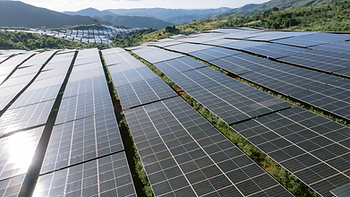
From the mountain, the sun does not ask permission. It rises, spills across the slopes, and turns thousands of solar panels into silent collectors of power. Below, Olongapo wakes beneath a landscape that is no longer defined only by trees and ridges, but by a new symbol of the country’s energy future.

It is easy to call it green. After all, sunlight is clean. Solar panels do not burn coal to produce electricity. And for a country searching for alternatives to fossil fuels, every megawatt of renewable energy can seem like another step toward a cleaner tomorrow.

But the grass isn’t always greener on the other side.

Sometimes, the question is what happened to the grass in the first place.

The AboitizPower Olongapo Solar Power Plant in Barangay New Cabalan is one of the country's large-scale renewable-energy projects, with a capacity of 221 megawatts peak. Its purpose is straightforward: capture sunlight and turn it into electricity.

It is the kind of project that fits neatly into the picture of a greener Philippines—one where the sun, rather than fossil fuels, helps keep homes lit, businesses running, and communities powered.

But energy does not appear from nowhere.

Even renewable energy needs somewhere to stand.

Solar farms require land. Roads need to be built. Equipment needs to be transported. Transmission infrastructure needs space. And when the land is a mountain, the environmental equation becomes more complicated.

Because a mountain is not simply land waiting to be developed.

It is an ecosystem.

It holds soil. It absorbs rainfall. It provides shelter for wildlife. It helps shape the environment of the communities living around it.

And unlike a solar panel, it cannot simply be replaced when its useful life is over.

The debate becomes even more significant with the proposed second phase of the Olongapo solar project.

Aboitiz Renewables has proposed adding roughly 179 megawatts of solar capacity in the Mt. Balimpuyo area of Barangay Sta. Rita. The expansion has been presented as another opportunity to increase renewable-energy generation and contribute to the country’s transition toward cleaner power.

But for some residents, the mountain is more than a potential site for solar panels.

It is home.

In 2025, residents of Barangay Sta. Rita opposed the proposed expansion, with hundreds signing a petition against it. Concerns raised included possible tree cutting, flooding, erosion, and landslides.

The conflict is therefore not simply solar versus coal. It is one kind of green versus another.

The green of renewable energy meets the green of the mountain. And suddenly, the answer is not so simple.

A solar panel can turn sunlight into electricity.

It cannot hold a hillside together.

It cannot provide a habitat for wildlife.

It cannot absorb rainwater the way a forest can.

It cannot replace the ecological functions of a mature tree.

That does not make solar power bad.

It makes the decision about where and how solar power is developed more important because renewable does not automatically mean impact-free. Every energy source leaves some kind of footprint. The difference is where that footprint falls, how large it becomes, and whether the damage can be prevented, reduced, or restored.

For communities beneath a mountain, those questions are not theoretical.

A change in the landscape can eventually become a change in their daily lives.

The rain that falls on the mountain does not stop at the property boundary.

The Philippines needs renewable energy.

There is little argument against the need to diversify the country's energy sources and reduce dependence on fossil fuels. But perhaps the country's definition of a “green future” needs to become wider.

It should mean more than replacing one source of electricity with another.

It should mean protecting the forests, watersheds and communities that make that future worth living in because clean energy should not force people to choose between electricity and environmental security.

The goal should not be to make one side greener by making another side less green. It should be to find a way for both to exist.

From a distance, a solar farm can look like progress. Rows of panels glint under the afternoon sun. Electricity is produced without the smoke of a coal plant. A renewable future appears within reach.

But walk closer, and the picture becomes more complicated.

There are people beneath the panels. There are communities beside the mountain.

There are trees, soil, wildlife, and waterways that existed long before the first solar panel arrived.

The challenge, then, is not deciding whether the Philippines should pursue renewable energy. It should.

The harder question is how to pursue it without forgetting that the environment we are trying to protect extends beyond the energy source itself.

The sun will keep shining.

The demand for electricity will keep growing.

And the push for renewable energy will continue climbing.

But as the country reaches for a brighter future, it must remember to look down at the ground beneath its feet. Because sometimes, the grass isn’t always greener on the other side.

Sometimes, the grass is already green where we stand.

Comments


Top Stories

Stay updated with the latest news from Pulilan. Subscribe to our newsletter for instant updates.

Contact us

  • Instagram
  • Facebook
  • Twitter

© 2023 by Pulilan News Hub. All rights reserved.

bottom of page